
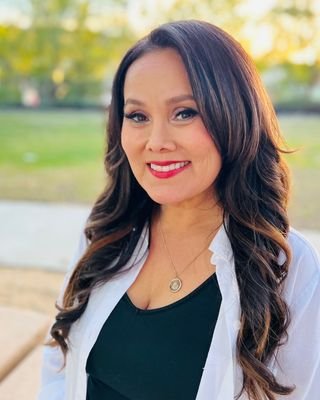
The work is clinical.
The relationship is human.
I believe meaningful therapy asks for both: a therapist with the training to work skillfully with complexity, and a relationship in which you can feel safe enough to be fully yourself.
My style is warm, engaged, and deeply collaborative. I won't sit silently across from you while you try to figure everything out on your own, nor will I approach you as a collection of symptoms to be fixed. I want to understand the person in front of me—your history, your relationships, the ways you've learned to protect yourself, and the parts of you that may be ready for something different.
Many of the people I work with are thoughtful, insightful, and highly self-aware. They may already understand why certain patterns exist. What they're looking for now is a way of working that helps that understanding become something they can actually experience and feel.
That is where our work begins.
A DEEPER WAY OF WORKING
Understanding the past isn’t always the same as changing how we respond to it.
My practice is grounded in experiential, trauma-informed psychotherapy.
Rather than relying primarily on conversation and insight, I integrate approaches that allow us to work with emotion, memory, the nervous system, internal protective patterns, and the ways past experiences may still be carried in the present.
My advanced training includes Internal Family Systems (IFS), EMDR and Attachment-Focused EMDR, Somatic Experiencing, Brainspotting, and Emotionally Focused Therapy, along with specialized training integrating IFS and EMDR. I draw from these approaches to provide individualized therapy intensives, thoughtfully integrating modalities based on each client’s unique needs, goals, and readiness.
I don’t believe in applying a technique simply because it is the modality of the moment. Different people—and different moments in therapy—call for different ways of working.
Sometimes we may slow down and listen carefully to a protective part. Sometimes we may use EMDR to process an experience that continues to carry emotional intensity. Sometimes the most important information is coming from the body rather than from words.
The method should serve the person, not the other way around.
WHAT IT'S LIKE TO WORK TOGETHER
Therapy can be deep without feeling distant.
I take this work seriously, but I don't believe therapy has to feel clinical or formal all the time.
There is room in our work for curiosity, honesty, emotion, quiet, humor, uncertainty, and the occasional moment when neither of us knows exactly where something is going yet.
I tend to be active and engaged. I'll ask questions, notice patterns, offer observations, and slow us down when something important is happening. I may invite you to notice what's happening inside—not just what you're thinking, but what you're feeling, sensing, protecting, or needing.
I'll bring training and clinical judgment to our work, but I will also bring myself.
My intention isn't to tell you who you are or where you should go. It's to help create the conditions where you can understand yourself more deeply, relate to yourself with greater compassion, and discover what becomes possible when you no longer have to work quite so hard against yourself.
CLINICAL DEPTH MATTERS TO ME
I believe you deserve a therapist who keeps learning.
My commitment to education did not end when I completed graduate school.
I earned my Master of Social Work from Columbia University, specializing in Health, Mental Health, and Disabilities, and graduating with academic distinction. Since then, I have continued to pursue advanced experiential training with leading institutes and clinicians in trauma treatment.
That commitment is intentional.
Trauma can be complex. Human beings are complex. I believe practicing responsibly means remaining curious, continuing to study, seeking consultation, and refining the way I work as the field evolves.
My clinical experience has taken me through community mental health and private-practice settings, working with adults, couples, adolescents, children, and families navigating trauma, anxiety, depression, attachment and relationship difficulties, domestic violence, and complex trauma.
Over time, I became increasingly drawn to working with people who had developed considerable insight but still felt that something deeper remained unresolved. That led me toward increasingly experiential forms of psychotherapy—and eventually toward the longer-format intensive work that is now central to my practice.
Clinical excellence, to me, means never assuming there is nothing left to learn.
A LITTLE MORE ABOUT ME
The person I am in the room matters, too.
I believe therapy asks something of both people in the room. My training shapes how I understand what is happening, but who I am—my warmth, curiosity, intuition, humor, and humanity—shapes how I show up with you.
I value depth, but I also value realness. Therapy doesn't always have to feel heavy to be meaningful. There can be room for laughter, honesty, quiet, uncertainty, and moments when we simply slow things down enough to notice what is actually happening.
Outside the therapy room, I value time with my family, movement, travel, and the kinds of experiences that bring me back to myself—whether that's being near the ocean, discovering a new place, or simply slowing down enough to be present in my own life.
You don't need a perfectly polished version of yourself to do meaningful work here.
ADVANCED TRAINING & EDUCATION
Continued learning is part of how I care for the work.
My clinical education and advanced training reflect an ongoing commitment to trauma, attachment, experiential psychotherapy, and nervous-system-informed approaches.
EDUCATION
Master of Science in Social Work, Columbia University
Advanced Clinical Social Work · Health, Mental Health & Disabilities Specialization
INTERNAL FAMILY SYSTEMS (IFS)
Level 1, Level 2 & Level 3 Training — IFS Institute
EYE MOVEMENT DESENSITIZATION & REPROCESSING (EMDR)
EMDRIA-Approved Basic Training — Personal Transformation Institute
ADVANCED EMDR TRAINING
Attachment-Focused EMDR · Complex Trauma · Flash Approaches · EMDR + IFS / PARTS Protocol · EMDR Intensives
SOMATIC EXPERIENCING
Beginning I, II & III Training
BRAINSPOTTING
Phases 1, 2 & 3 · Advanced/Expansion Training
EMOTIONALLY FOCUSED THERAPY
EFCT Externship · Core Skills 1–4
WHEN YOU'RE READY
You don't have to know exactly where to begin.
If something here resonates with you, we can start with a conversation. A complimentary consultation is an opportunity to share a little about what brings you to therapy, ask questions, and see whether working together feels like the right fit.